Free Customer Booking Software
Today's Customers Want 24/7 Appointment Scheduling
Modern customers expect digital-first experiences from every business they interact with. Businesses that offer seamless online booking are the obvious choice.
Industries We Serve
Scheduling Software for Every Business Type
From salons to general contractors, Booking Surf helps businesses across all industries streamline their scheduling and grow revenue.
The Challenge
Why Businesses Leave Revenue on the Table
The demand is there. The customers are there. But without the right systems in place, most businesses capture only a fraction of the revenue available to them.
Tech-Savvy Customers Expect More
Explosive Growth Strains Capacity
Seasonal Demand Fluctuations
The Solution
How Appointment Scheduling Transforms Your Business
Purpose-built for businesses of all types. Fill your schedule, reduce no-shows, automate customer communication, and give yourself the tools to win in today's competitive market.
24/7 Online Booking
Automated Reminders
Review Automation
Schedule Optimization
Re-Engagement Campaigns
Scheduling Software to Automate Appointment Booking
Appointment Scheduling System Overview
Automate your appointment scheduling process with our comprehensive booking system. Manage appointments, track service status, and optimize your workflow in real-time.
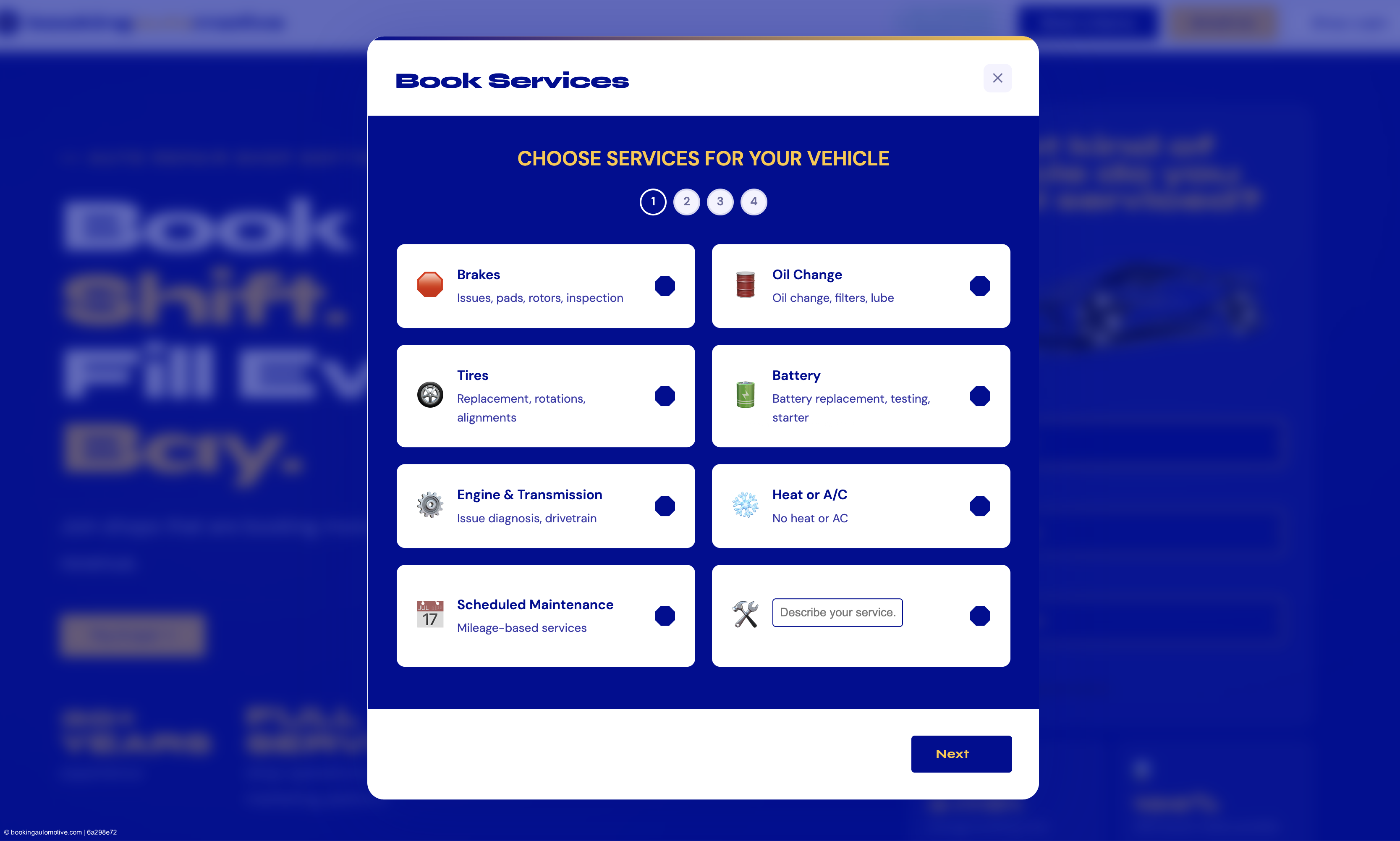
24/7 Appointment Scheduling
Schedule appointments, track service status, and manage staff assignments in real-time
Book from Any Device
Book appointments from any device - desktop, tablet, or mobile
Book from Google Maps or Your Website
Book appointments directly from Google Maps or your website
Real Results
What Businesses Achieve with Booking Automation
Businesses across all industries are seeing transformative results. Here's what the data shows:
Schedule Utilization
Monthly Revenue
Online Booking Rate
"In today's market, if you're not tech-forward, you're invisible. Booking Surf made us look as modern as the customers we serve."
— Sarah M., Business Owner — Chicago, ILGetting Started
Up and Running in Days, Not Months
Booking Surf is designed for fast implementation. Businesses are typically live within a week.
Pricing
Simple, Transparent Pricing
Perfect for small businesses getting started
- ✓24/7 Online Booking
- ✓Automated Reminders
- ✓Custom Booking Page
- ✓Up to 2 Staff Members
- ✓Unlimited Appointments
- ✓Basic Analytics
- ✓Email Support
- ✓Mobile & Desktop Access
For growing businesses with teams
- ✓Everything in Starter
- ✓Custom Branding - We Match Your Style and Colors
- ✓Unlimited Staff Members
- ✓SMS Reminders
- ✓Multi-Location Support
- ✓Google Calendar Sync
- ✓Advanced Analytics
- ✓Review Automation
- ✓Priority Support
- ✓Intake Forms
Custom solutions for large organizations
- ✓Everything in Professional
- ✓Unlimited Locations
- ✓API Access
- ✓Custom Integrations
- ✓Dedicated Account Manager
- ✓White-Label Options
- ✓Advanced Reporting
- ✓SLA Guarantee
- ✓Custom Workflows
- ✓24/7 Phone Support
Everything You Need to Grow Your Business
58 answers covering SEO, Google Maps, increasing revenue, declined service recovery, schedule optimisation, and how to use booking-surf.com to automate all of it.
3 questions
Google Maps & Booking
01How do I get into the Google Maps 3-pack?
The 3-pack ranking factors you can control are relevance and prominence. For relevance: select every applicable service category, write detailed service descriptions, add photos. For prominence: earn consistent recent reviews, respond to every review, post weekly GBP updates. Proximity (how close you are to the searcher) is the only factor you can't directly influence.
02Can customers book appointments directly from Google Maps?
Yes — Google's 'Reserve with Google' feature adds a 'Book Online' button directly in your Maps listing. Customers book without visiting your website or calling. This is one of the highest-converting features for local businesses because it removes all friction, especially for after-hours bookings.
03How do I handle Google Business Profile posts effectively?
Post 1–2 times per week. Best performing post types: seasonal service reminders, before/after job photos, limited-time promotions, and new service announcements. Every post should include a direct booking link so browsers become booked appointments.
3 questions
Analytics & Increasing Revenue
01What is average order value and why does it matter more than customer count?
Average order value is the average dollar value of each invoice. It's easier to increase revenue by raising order value on customers already booked than by finding new customers. A business raising order value from $400 to $500 on 40 customers per week generates the same additional revenue as finding 10 new customers per week — with zero extra marketing cost.
02What's the most effective way to increase order value without upselling aggressively?
Digital service documentation with photo or video evidence. When customers see photos of the work needed, approval rates for recommended services jump dramatically. Businesses using digital documentation see 18–35% higher order values than those doing verbal-only recommendations. The same work, presented transparently with evidence, converts at 2× the rate.
03How do I track which marketing channels drive the highest-value customers?
Ask 'How did you hear about us?' at check-in and record it consistently. Over 90 days you'll see which sources (Google, referral, Facebook, walk-in) produce customers with the highest order values and best return rates. For more sophisticated tracking, use unique phone numbers or landing pages per campaign so attribution is automatic.
3 questions
Tracking Declined Services
01How do I track when customers decline recommended services?
A proper declined service system captures: customer name, service details, specific service declined, estimated cost, date declined, and follow-up date. Most business management systems have a declined work field — the problem is that without automated follow-up, the data just sits there unused.
02What's the best follow-up sequence for declined services?
Categorise by urgency: Safety-critical — follow up in 14 days with a direct safety message. Maintenance-due — follow up at 30 and 60 days. Optional — follow up at 60–90 days. All follow-ups should include a direct booking link with the specific service pre-selected.
03How much revenue can I recover from declined services?
Businesses with a systematic declined service follow-up programme recover 15–25% of deferred revenue within 90 days. If your business does $60,000/month and 25% of recommended work is declined ($15,000/month deferred), recovering 20% is $3,000 in monthly revenue — with zero additional marketing spend.
4 questions
SEO & Online Visibility
01How do I get my business to show up on Google?
Getting found on Google comes down to three things: your Google Business Profile, your website content, and local citations. Start with your GBP — claim it, fill out every field, add photos, and list all services. On your website, create a dedicated page for each service and mention your city naturally in the content. Google needs to know you're the right business for local searches.
02How important are online reviews for SEO, and how do I get more?
Reviews are one of the top three local ranking factors for Google. Businesses with more recent, high-quality reviews consistently outrank competitors. The fix is simple: ask at the right moment — right after the service is completed. Automated post-service SMS review requests increase review velocity 3–5× within the first 90 days, which directly improves local search ranking.
03What keywords should my business website target?
Focus on three tiers: Service + location, problem-based searches, and service-specific terms. Avoid generic terms — local intent searches are where the revenue is. A page titled 'Service in [Your City]' will consistently outperform a generic 'Services' page.
04Should I run Google Ads or focus on organic SEO?
Both have a role. SEO builds long-term visibility that compounds over time. Google Ads gives immediate visibility for competitive searches. The highest-ROI approach: invest in SEO first (3–6 months to see results), then add targeted Google Ads for your highest-margin services. The most common mistake is running ads to a site without a real booking flow — ad spend is wasted without conversion.
3 questions
Schedule Optimization
01How do I know if my schedule is being used efficiently?
Calculate your schedule utilisation rate: total billed hours ÷ (number of appointment slots × hours open × working days) × 100. Industry average is 55–65%. Best-in-class businesses hit 80–90%. If you're below 70%, focus first on no-show reduction and waitlist management — these are the fastest improvements.
02What's the most effective way to reduce no-shows?
A three-touch sequence: immediate booking confirmation → 24-hour reminder with reply-to-confirm → morning-of reminder for afternoon appointments. This sequence cuts no-shows by 55–70%. Crucially, every reminder should include an easy reschedule link — a rescheduled appointment is not a no-show.
03How do I fill slow days and slow morning slots?
Three tactics that work: (1) Active waitlist — never turn away a customer, add them to a list, notify instantly when gaps open. (2) Last-minute availability campaigns — 48 hours before slow days, send targeted messages to due-for-service customers. (3) Service reminder sequences — automated messages to customers based on service intervals keep your calendar consistently filled.
3 questions
Customer Communication
01What's the ideal frequency for customer communication?
Communication should be value-based, not volume-based. Service reminders based on actual intervals (not generic 'every 6 months'), post-service follow-ups to ensure satisfaction, and seasonal promotions relevant to their service history. Most businesses communicate too little — the sweet spot is 4–6 meaningful touches per year per active customer.
02How do I handle difficult customer complaints effectively?
The LEAD method: Listen without interrupting, Empathise with their frustration, Apologise sincerely (even if not at fault), Deliver a solution. Never argue publicly — take it offline immediately. Speed matters: responding within 2 hours prevents 80% of negative reviews from being posted. Follow up after resolution to confirm satisfaction.
03Should I use SMS, email, or both for customer communication?
Use SMS for time-sensitive communications (reminders, confirmations, urgent changes) — 98% open rates and read within 3 minutes. Use email for detailed information (invoices, service reports, newsletters). The most effective approach is SMS for urgency + email for detail, with consistent messaging across both channels.
3 questions
Payment & Pricing
01How do I handle payment collection to reduce outstanding balances?
Collect payment before service completion when possible. For service businesses, this means getting a card on file and charging after service rather than invoicing. Outstanding balances over 30 days have less than 20% recovery rate. Automated payment reminders at 3, 7, and 14 days past due improve collection rates by 40%.
02What's the best way to handle price increases without losing customers?
Give 30–60 days notice, explain the reason clearly (rising costs, improved service quality), and offer value in return (extended hours, new services, loyalty benefits). Communication matters more than the amount — customers accept reasonable increases when they understand the why. Never increase prices for existing customers mid-contract.
03Should I offer discounts for pre-payment or package deals?
Pre-payment discounts (5–10% for 6–12 month packages) improve cash flow and customer commitment, but ensure the discount doesn't erode margins below 25%. Package deals work best for recurring services (monthly maintenance, quarterly treatments). Avoid discounting one-time services — it devalues your expertise.
3 questions
Staff & Team Management
01How do I measure staff performance beyond revenue numbers?
Track customer satisfaction scores per staff member, on-time arrival rate, first-call resolution (for service businesses), and peer review scores. Revenue tells you what they did, but satisfaction tells you how they did it. Top performers often aren't the highest revenue generators — they're the ones with the highest customer retention and referral rates.
02What's the most effective way to train new staff?
Structured shadowing (2 weeks minimum), documented SOPs for every process, and role-play scenarios for customer interactions. Don't rush training — the first 90 days determine long-term performance. Assign a mentor for the first 3 months and conduct weekly check-ins to address issues before they become habits.
03How do I handle staff scheduling to balance coverage and cost?
Match staffing to actual demand patterns, not just hours of operation. Use historical data to predict busy periods and schedule accordingly. Cross-train staff so they can flex between roles based on demand. For service businesses, schedule based on confirmed appointments plus a buffer for walk-ins, not just fixed shifts.
3 questions
Marketing Automation
01What marketing tasks should I automate first?
Start with high-impact, low-effort automations: post-service review requests, service reminder sequences, birthday/anniversary messages, and re-engagement campaigns for inactive customers. These require one-time setup but provide ongoing ROI. Automate follow-up, not acquisition — you still need human touch for new customer acquisition.
02How do I build an effective email marketing list?
Never buy lists — they have low engagement and can damage sender reputation. Build organically through website sign-ups, in-person collection (with consent), and social media lead magnets. Offer value in exchange for email addresses (exclusive discounts, industry insights, early access). Segment your list by customer type and service history for targeted campaigns.
03What metrics should I track for marketing ROI?
Track cost per acquisition (CPA), customer lifetime value (CLV), conversion rate by channel, and attribution to first touch. Don't obsess over vanity metrics like likes or impressions. Focus on revenue generated per marketing dollar spent. If a channel has high engagement but low conversion, it's not working regardless of how 'popular' it seems.
3 questions
Customer Retention
01What's the average customer retention rate I should aim for?
Service businesses should aim for 75–85% annual retention rate. Below 70% indicates a systemic problem — either service quality, communication, or value perception. Above 85% suggests you may not be acquiring enough new customers to grow. The sweet spot is 80–85% retention with steady new customer acquisition.
02How do I identify customers at risk of leaving?
Warning signs: reduced booking frequency, smaller order values, missed appointments without rescheduling, negative feedback patterns, or silence after service issues. Automated churn risk scoring based on these factors helps you intervene before they leave. Reach out personally to at-risk customers — a simple 'we haven't seen you lately' message prevents 30–40% of churn.
03What loyalty programs actually work for service businesses?
Simple programs work best: tiered discounts based on annual spend, referral bonuses (both parties benefit), and priority scheduling for loyal customers. Avoid complex point systems — customers can't calculate value and don't engage. The most effective programs are those where the benefit is immediate and obvious.
3 questions
Dental Practice
01How do I reduce patient no-shows in a dental practice?
Implement automated confirmation systems: SMS reminders 48 hours and 24 hours before appointments, offer easy rescheduling links, and charge a deposit for new patients. For hygiene appointments, pre-book the next visit before the patient leaves — this reduces no-shows by 40% compared to calling back later.
02What's the best way to handle dental insurance verification?
Verify insurance eligibility 2–3 days before appointments, not at check-in. This prevents surprise bills and payment disputes. Use automated verification tools that integrate with major insurance providers. Document coverage details in the patient record so the entire team can access them.
03How does booking software help dental practices improve efficiency?
Booking software automates patient reminders, insurance verification, and appointment scheduling. Dental practices using booking software see 35% fewer no-shows, 40% faster check-ins, and 25% more daily capacity. Automated hygiene recall sequences keep chairs filled, while online booking lets patients schedule 24/7 without calling your office.
3 questions
HVAC Diagnostics
01How do I optimise HVAC service scheduling during peak seasons?
Schedule maintenance visits during shoulder seasons (spring for AC, fall for heating) to build recurring revenue. During peak season, use triage scheduling: emergency calls get same-day service, maintenance gets scheduled within 48 hours, installations get 1–2 week windows. This balances customer expectations with technician capacity.
02What's the most effective upsell for HVAC service calls?
Digital diagnostic reports with photos of equipment condition. When customers see visible wear, corrosion, or efficiency issues, conversion on replacement or upgrade recommendations jumps from 15% to 45%. Include estimated energy savings calculations — ROI justification makes the decision easier.
03How does booking software help HVAC businesses manage peak season demand?
Booking software automates technician dispatch, route optimisation, and emergency response triage. HVAC companies using booking software see 30% more daily service calls, 25% reduced drive time, and 40% better peak season capacity. Online booking lets customers schedule maintenance 24/7, while automated reminders keep your calendar filled during shoulder seasons.
3 questions
Chiropractic Care
01How do I improve patient compliance with treatment plans?
Explain the 'why' behind each adjustment using visual aids or models. Set clear milestones and celebrate progress with patients. Send between-visit educational content that reinforces treatment value. Patients who understand the purpose of their care are 3× more likely to complete treatment plans.
02What's the best way to handle chiropractic insurance billing?
Pre-authorise treatment plans when possible, especially for longer care programs. Document medical necessity thoroughly for each visit — this prevents claim denials. Use automated billing that checks for common errors before submission. Follow up on denied claims within 48 hours to appeal while the case is fresh.
03How does booking software help chiropractic practices manage patient care?
Booking software automates appointment scheduling, treatment plan tracking, and insurance pre-authorisation. Chiropractic practices using booking software see 40% better treatment plan compliance, 35% fewer billing errors, and 25% more daily patient capacity. Automated between-visit education keeps patients engaged, while online booking lets them schedule adjustments 24/7.
3 questions
Physical Therapy
01How do I improve patient attendance for physical therapy sessions?
Emphasise that missed sessions delay recovery and can lead to regression. Send progress reports after every 4–6 sessions so patients see tangible improvement. Offer flexible scheduling including early morning and evening slots. Patients who see measurable progress are 70% less likely to miss appointments.
02What's the most effective way to handle PT insurance authorizations?
Request authorisations for the entire treatment plan upfront when possible, not session-by-session. Document functional limitations and progress toward goals at every visit. Use outcome measures that insurers recognise — this supports continued authorisation requests.
03How does booking software help physical therapy practices manage patient care?
Booking software automates appointment scheduling, progress tracking, and insurance authorisation management. Physical therapy practices using booking software see 35% better session attendance, 40% faster authorisation processing, and 30% more daily patient capacity. Automated progress reports keep patients motivated, while online booking lets them schedule sessions 24/7.
3 questions
Restaurant Management
01How do I reduce no-shows for restaurant reservations?
Collect credit cards for parties of 6 or more, send confirmation SMS 24 hours before with a 1-click cancellation option, and implement a 3-strike policy for repeat no-shows. For peak times, overbook by 10–15% knowing some guests won't show. Use reservation data to identify your most unreliable customers.
02What's the best way to optimise table turnover without rushing guests?
Track actual dining times by table size and time slot — use this data for realistic reservation spacing. Have pre-bussing protocols so tables are reset within 5 minutes of guests leaving. Offer dessert menus early for guests who seem to be lingering, but never pressure them to leave.
03How does booking software help restaurants manage reservations and tables?
Booking software automates reservation management, table assignment, and waitlist handling. Restaurants using booking software see 40% fewer no-shows, 35% better table utilisation, and 25% more daily covers. Online booking lets customers reserve tables 24/7, while automated waitlist notifications fill last-minute cancellations instantly.
3 questions
Hair Salon
01How do I increase retail product sales in a salon?
Demo products during services — let customers feel and smell the products. Recommend products based on their specific concerns, not generic suggestions. Offer a 'complete the look' discount when they purchase products used during their service. Staff education on product benefits increases sales by 35%.
02What's the best way to handle salon service cancellations?
Require 24-hour notice for cancellations, charge 50% for late cancellations, and charge full price for no-shows. However, offer one courtesy cancellation per quarter for loyal clients. Send automated reminders 48 hours before appointments to reduce last-minute cancellations.
03How does booking software help salons and spas manage appointments?
Booking software automates appointment scheduling, staff assignment, and retail product tracking. Salons using booking software see 45% fewer cancellations, 40% better staff utilisation, and 35% more daily appointments. Online booking lets clients schedule services 24/7, while automated reminders reduce no-shows and keep your schedule full.
3 questions
Appliance Repair
01How do I improve first-time fix rates in appliance repair?
Stock the most common replacement parts in your vehicles — this eliminates return visits for simple parts. Use diagnostic checklists to ensure thorough troubleshooting. Train technicians to ask detailed questions during booking so they arrive prepared with the right tools and parts.
02What's the best way to handle appliance repair pricing?
Provide flat-rate pricing for common repairs — customers prefer predictable costs over hourly rates. For complex issues, give a range estimate with approval required before exceeding it. Always explain what the repair includes and excludes to avoid disputes.
03How does booking software help appliance repair businesses manage service calls?
Booking software automates technician dispatch, parts inventory tracking, and customer communication. Appliance repair businesses using booking software see 35% higher first-time fix rates, 40% faster response times, and 30% more daily service calls. Online booking lets customers schedule repairs 24/7, while automated reminders reduce no-shows and keep technicians productive.
3 questions
Pet Grooming
01How do I handle difficult or anxious pets during grooming?
Schedule extra time for known anxious pets and communicate this to the owner. Use positive reinforcement techniques and take breaks when needed. Never force a scared pet — it's unsafe and damages your reputation. Build trust by letting pets sniff and explore before starting grooming.
02What's the best way to manage pet grooming appointments?
Pre-book the next appointment 6–8 weeks out at the end of each session. Send reminders 1 week and 1 day before appointments. Use a waitlist system for popular time slots. Regular grooming every 6–8 weeks is easier on pets and provides predictable recurring revenue.
03How does booking software help pet grooming businesses manage appointments?
Booking software automates appointment scheduling, pet profile management, and recurring service reminders. Pet grooming businesses using booking software see 40% better appointment adherence, 35% more daily grooming slots, and 30% higher customer retention. Online booking lets pet owners schedule grooming 24/7, while automated reminders keep your schedule consistently filled.
3 questions
Pest Control
01How do I improve customer retention for recurring pest control services?
Send service reminders with photos showing the effectiveness of previous treatments. Educate customers about seasonal pest patterns so they understand the value of year-round protection. Offer loyalty discounts for annual contracts — customers who commit annually stay 85% longer than month-to-month customers.
02What's the best way to handle pest control emergency calls?
Have a separate emergency dispatch protocol with guaranteed response times. Charge premium rates for emergency service — this compensates for disrupting regular schedules. Document emergency cases thoroughly to identify repeat problem properties that may need more intensive treatment plans.
03How does booking software help pest control businesses manage service routes?
Booking software automates technician routing, recurring service scheduling, and customer communication. Pest control businesses using booking software see 35% better route efficiency, 40% higher customer retention, and 30% more daily service stops. Online booking lets customers schedule treatments 24/7, while automated reminders ensure recurring services are never missed.
Ready to Grow?
Ready to Fill Your Schedule?
Join thousands of businesses across the country growing their revenue with Free Customer Booking Software. Your competitors are already looking at this — don't let them get there first.